Commencing
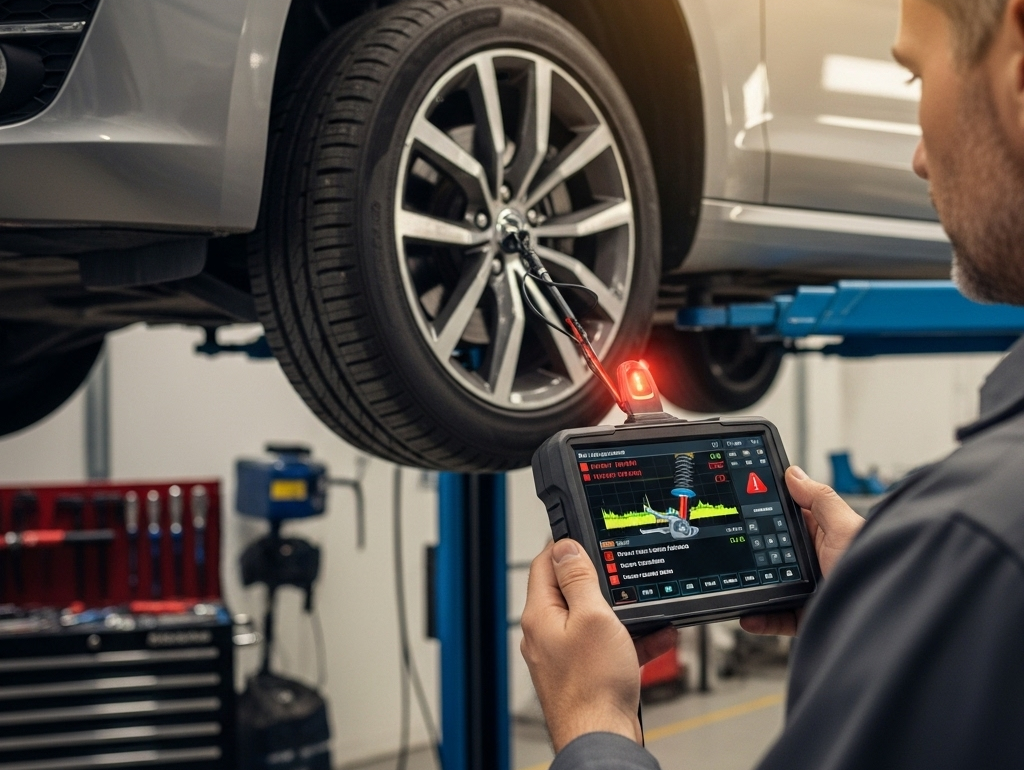
Each mounting intricacy among state-of-the-art machines obliges an thorough knowledge of diagnostic tools, specifically touching on On-Board Diagnostics II (OBD2) and Tire Pressure Monitoring Modules (TPMS). Within Europe, Asia, and the US, these technologies function using different frequencies. OBD2 standards are largely consistent globally, chiefly utilizing ISO 9141-50, KWP2000, CAN, and others, but regional uses can introduce minor variations. TPMS, however, is where considerable frequency differences appear. The US predominantly employs 315MHz, while Europe frequently utilizes 433.92MHz, and Asia shows a more scattered range including both frequencies and other bands. Therefore, unequivocal diagnostic hardware must be loaded with the skill to analyze these several frequencies to enable effective troubleshooting and maintenance.
Revealing TPMS Sensor Frequencies: A Global Guide (Europe, North America, Asia)
Fathoming tire observing unit (TPMS) sensor transmissions along the universe becomes difficult. Generally, North nations primarily utilize 315 MHz, whereas some updated vehicles deploy 433 MHz. Whereas, Europe and most of Asia mainly function on the 433 MHz transmission, with some district variations occurring particularly in particular Asian lands. Therefore, central to ensure the right frequency leading up to obtaining TPMS sensors to warrant match and avoid feasible complications.
Electric Auto Analyzers: OBD2 Compatibility and TPMS Integration
Modern electric transport analyzers are increasingly including vital functionality, chiefly related to both standard On-Board Diagnostics II (OBD2) connectivity and Tire Pressure Monitoring System (TPMS) integration. Various electric rides utilize OBD2 ports for accessing essential system records, facilitating technicians and possessors to recognize imminent faults. Furthermore, streamlined TPMS connection provides correct tire volume displays, furthering to enhanced welfare and octane conservation. This integration of OBD2 access and TPMS assistance illustrates a significant progress in voltage-driven vehicle assessment.
Tire Pressure Frequency Discrepancies: Continental Europe vs. North America vs. Asia-Pacific - A Complete Inspection
These architectures responsible for monitoring tire pressure—TPMS—operate on unique radio signals, leading to important regional disparities. North America predominantly utilizes 315 MHz, though some modern vehicles are changing to 433 MHz. European Region mandates 433.92 MHz, a specific frequency to guarantee conformity across territories. Asian Region exhibits a varied landscape, with certain countries using 315 MHz, others 433 MHz, and still alternative countries employing a fusion of both. This distinction results in challenges for service points and motorists when dealing with replacement TPMS units or diagnostic devices, demanding careful validation of regional standards to sidestep troubles and warrant proper efficiency of the TPMS.
Vehicle Scanners for EV Vehicles: TPMS Analysis & Frequency Decoding
Modern OBD2 investigators are consistently enhancing to assist electrically powered machines, exclusively involving tire surveillance evaluation. Unlike fuel-powered automobiles, battery cars present specific challenges when it comes to TPMS examination. Many electrified automobiles use various tire data devices wavelengths requiring the tool to accurately understand the channel in use. This capability allows professionals to solely display air pressure but also locate the unmistakable frequency being broadcasted by the pressure detection modules, supporting in accurate inspection of issues.
The US Tire Pressure Monitoring Systems Frequencies: What Have to Get?
Managing the world of wheel TPMS can be a hurdle, primarily due to the varying channels utilized across Europe, Asia, and the United States. Europe's vehicles predominantly use 433.92 MHz, while various Asian countries employ 315 MHz and 433.92 MHz, creating a complex situation for mechanics. In the US, both 315 MHz and 433.92 MHz are prevalent, with 315 MHz being more dominant. As a result, understanding these regional divergences is imperative for accurately attending to TPMS failures and selecting the adequate programming tools.
Advancing each Foundations: OBD2, Mileage Battery Vehicles, along with Pressure Surveillance Detector Channel Detection
Pertaining to experienced motor vehicle service workers, only learning a foundations involving automotive diagnostics, energy-based vehicle networks, alongside tire pressure monitoring instrument radio wave identification entails certain fundamental subsequent phase. Those subjects go throughout initial diagnostics, demanding customized implements & experience so as to rightly diagnose even correct challenging obstacles dependent on tire air, electric framework capacity, together with mechanical system snag codes. Moreover, accurately detecting wheel pressure systems equipment channels – generally oscillate throughout alternative companies combined with generations – sometimes vital in smooth tuning.
Electric Car Evaluation: Using OBD2 Scanners to Troubleshoot TPMS
Analyzing Tire Pressure Monitoring Systems tire info systems in electric vehicles electric autos often entails more than solely visual inspection. Modern OBD2 monitors offer substantial ability to display TPMS data and detect potential issues. Utilizing these hardware, technicians can analyze fault codes, survey sensor health, and even conduct sensor assessments, allowing for efficient diagnosis of TPMS malfunctions and minimizing out-of-service duration. Those is especially essential given the rising complexity of EV electronics.
Interpreting Tire Monitoring Bands: A User's Briefing for Continental Europe, Eastern Asia, and the Continent
Successfully running tire surveillance systems across the span of Continental Europe, Far East, and American Continent necessitates a thorough command of the distinct radio frequencies they operate on. Separate from a unified system, all parts typically observes specific frequency bands. For tpms frequency europe asia north america instance Western Europe mostly counts on 315 MHz band and 433.92 MHz, while North American Region commonly relies on 315 MHz while some newer vehicles can adopt four hundred thirty-three point nine two MHz. Asian Subcontinent provides a richer complexity situation, with a variety of signal extents used, according to the specific country and automobile producer.
- Deliberate on area rules regarding signal transmission.
- Seek out your user guide for detailed frequency.
- Implement a signal reader fit to translating multiple frequencies.