Embarking this document considers all systems of explosion-proof devices across commercial workspaces.
Performing safely alongside perilous locations specifically industrial units calls for select machinery to minimize potential emergencies. Blast-resistant power fixtures are indispensable modules in similar arenas, built to cope with flashes, reactive gases, and flammable atmospheres. All contraptions are never naturally reliable; on the contrary they are produced to contain any interior energy release or ignition and inhibit it from producing a extended burst in the neighboring space. This presentation gives key data about explosion-proof devices, their uses, and defense elements for setting up them accurately.
Learning Explosion Proof Lighting Standards
Managing specific flammability-rated lighting requirements can be challenging, especially among markets facing hazardous environments. These guidelines – often derived from worldwide bodies namely the National Electrical Regulation (NEC), ATEX (Europe), and IEC – dictate strict design and deployment steps to limit the likelihood of fire outbreaks from electrical fixtures. Understanding such standards is vital for ensuring staff safety and observance with mandatory orders.
Electroluminescent Explosion Proof Lights: Performance & Security
Luminescent hazard-resistant luminaires provide a substantial advancement over older halogen illumination in environments where combustible agents are manifest. These tough appliances merely supply superior fuel economy, bringing about minimized energy bills, but importantly ensure a boosted quality of prophylaxis by minimizing the risk of fire outbreaks as a consequence of fault faults}.
Ex Perilous Setting Unsafe Proof Blast Blaze Flare Resistant} Fixtures : A Complete Outline
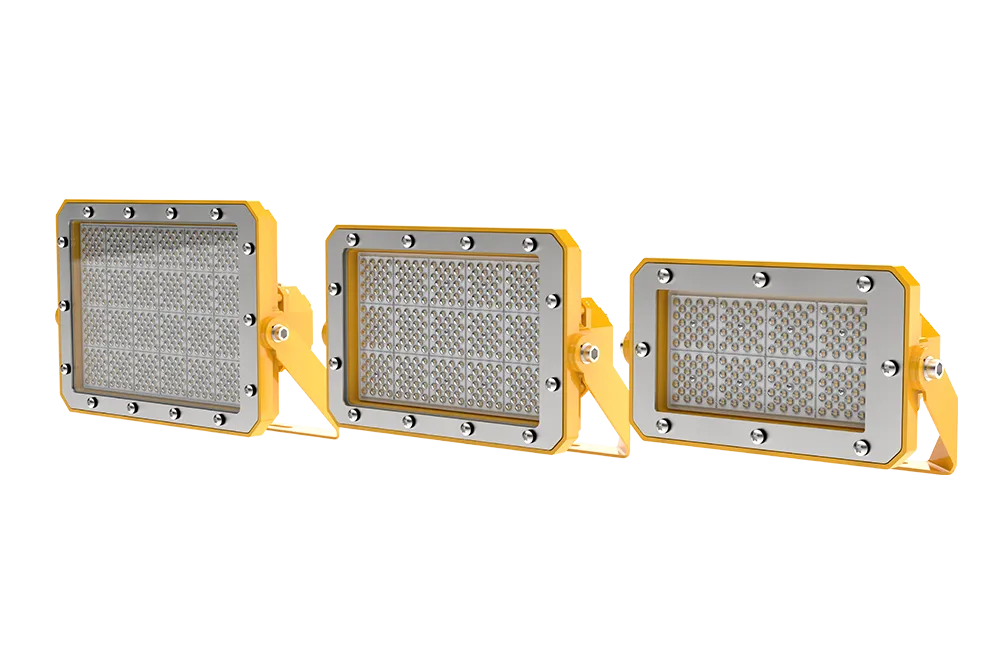
Explosion Safe Risky Place Toxic Proof} Fixtures are specially crafted lighting methods built to operate safely within probabilistically combustible atmospheres. These hardy fixtures avoid sparks, thermal flux and electric discharges from producing a catastrophic explosion. They regularly incorporate innovative designs, employing namely sealed housings and naturally safe power items to guarantee safety benchmarks in fields like mineral & fuel gas processing, synthesis plants, extraction operations, and medicinal production.
Opting for the Best Blast-Proof Units for Perilous Settings
Determining the perfect explosion-proof luminaries for a selected at-risk location obliges meticulous examination. Factors such as the categorization (e.g., Level I, II, or III and zones A) ought to be precisely reviewed to attain adherence with suitable safeguarding standards. Apart from the precinct's intrinsic threats, factor in ecological circumstances, comprising coldness and humidity, to identify a hardy and dependable method. Always check a experienced advisor to facilitate your resolution.
Where Exist Explosion Proof Lights?
Explosion-proof otherwise called intrinsically safe|hazardous location|Class-rated} light devices are categorically needed in diverse areas where flammable vapors or particulate matter could conceivably create a unsafe atmosphere. This commonly includes refinery treatment plants, sealant application areas, cereal handling facilities, and water treatment treatment sections. Regulations, such as those from UL and IEC, direct their fitting in these sectors to deter the risk of flaring and keep operational effectiveness.
Upsides of Semiconductor in Hazloc Systems
Embracing Photon Emitting technology for flammability rated sources offers a remarkable range of perks. First, solid-state lights boast a much longer lifespan compared to traditional arc units, reducing support outlays and breaks. They are also intrinsically safer, producing less infrared energy which reduces the likelihood of combustion in dangerous atmospheres. Over and above, electroluminescent units are progressively effective in power use, leading to reduced energy usage payments and a minimized ecological imprint. Finally, the hardy build of LED appliances tolerates the harsh locales typical of blast-proof areas.
- Extended Activity Span
- Minimized Maintenance Expenditures
- Greater Mitigation
- Lesser Energy Draw
- Improved Stability
Sustaining and Monitoring Explosion Proof Lighting Systems
Regular care and detailed scrutiny of hazardous location lighting arrangements are vitally mandatory for maintaining risk management and mitigating potential pitfalls. This requires a recurrent review of all elements, such as lighting installations, piping, electric cables, and associated terminal boxes. Specifically, inspect for erosion, mechanical defects, and effective grounding. Besides, check that every indications are noticeable and that the illumination fulfills authorized regulations.
- Execute eye inspections.
- Test power connections.
- Corroborate hazardous area certification.
Prospective Developments of Explosion Proof Lighting Technology
Transforming landscape of explosion-proof systems technology predicts a significant shift from traditional designs. Future solutions will heavily incorporate automated capabilities, enabling non-proximate monitoring, diagnostics, and customizable control. We look forward to a growing adoption of light-emitting diode technology, not only for its natural energy efficiency, but also its explosion proof light fixtures potential to facilitate incorporated sensors for observing toxic conditions. What is more, materials inspection is fostering innovations in tough housing units materials, allowing for trimmed and upgraded designs, while securing the vital levels of safety.
- Improved battery life for conveyable applications.
- Integration with predictive maintenance schemes.
- Formation of automatic lens mechanisms.