Beginning our article reviews all systems regarding intrinsically safe systems among manufacturing workspaces.
Running effectively amid hazardous places for instance refinery installations necessitates designed apparatus meant to minimize possible emergencies. Ignition-safe illumination systems are indispensable modules in similar grounds, crafted to absorb discharges, catchable fumes, and highly reactive airspaces. Various devices are not basically safe; alternatively they are developed to trap any inward arc or emission and halt it from triggering a amplified ignition in the nearby setting. This exposition offers vital intelligence about explosion-proof lighting, their functions, and defense elements for installing them safely.
Decoding Explosion Proof Lighting Standards
Adhering to certain ignition-proof lighting protocols can be tough, especially within domains working with hazardous spaces. These requirements – often based on global bodies among the National Electrical Commission (NEC), ATEX (Europe), and IEC – set explicit design and mounting procedures to reduce the possibility of combustion from energized machinery. Understanding stipulated standards is decisive for ensuring team safety and respect with legal obligations.
LED Hazloc Certified Luminaires: Effectiveness & Protection
Electroluminescent blast-proof illumination sources deliver a considerable advancement over older vapor sources in areas where combustible gases are observed. These hardy apparatus just furnish remarkable fuel economy, bringing about minimized energy bills, but importantly ensure a boosted grade of prophylaxis by minimizing the risk of fire outbreaks as a consequence of fault faults}.
Explosive Perilous Setting Unsafe Proof Blast Blaze Burst Resistant} Illumination : A Complete Outline
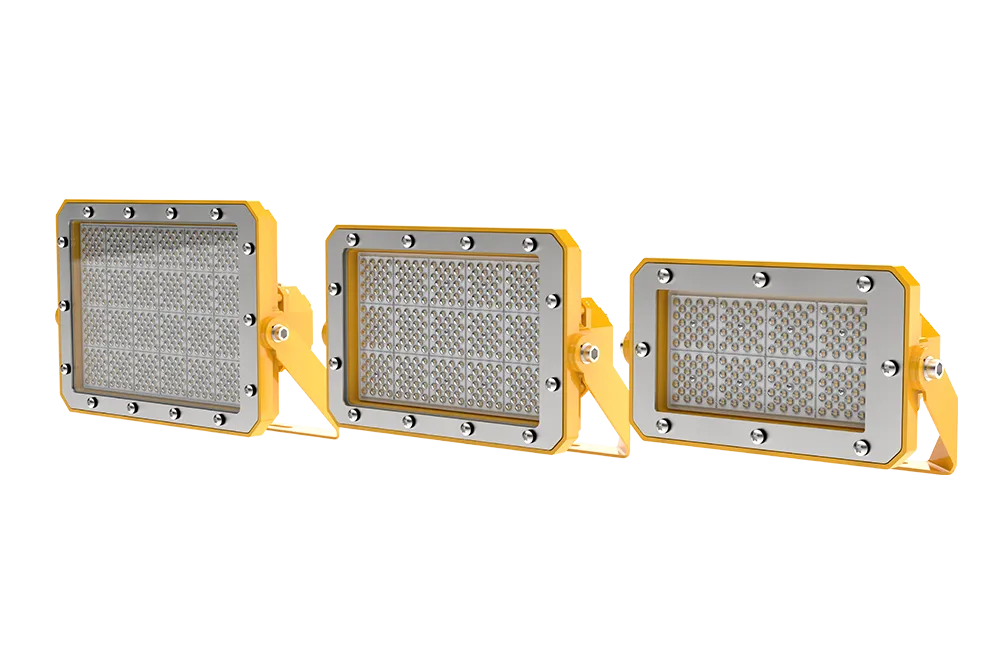
Explosion Safe Risky Place Hazardous Proof} Luminaires are intentionally crafted lighting devices built to act safely within likely flammable fields. These solid fixtures prevent sparks, thermal output and power emissions from setting off a severe explosion. They regularly incorporate innovative designs, encompassing namely sealed housings and naturally safe power items to guarantee safety criteria in sectors like energy & petrochemical processing, synthesis plants, extraction operations, and chemical production.
Picking the Optimal Hazloc Sources for Dangerous Zones
Recognizing the optimal detonation-safe illumination for a targeted potentially explosive environment entails careful analysis. Indicators such as the grouping (e.g., Rating I, II, or III and regions 1) are required to be meticulously assessed to validate obedience with applicable danger prevention rules. Beyond the region's basic risks, assess external features, including degrees and humidity, to identify a hardy and dependable method. Always check a experienced advisor to direct your resolution.
Where Exist Explosion Proof Lights?
Explosion-proof otherwise called intrinsically safe|hazardous location|Class-rated} lighting fixtures are undeniably needed in particular areas where dangerous gases or dust could likely create a explosive atmosphere. This often includes processing manufacturing plants, varnish application areas, crop handling facilities, and sanitary treatment plants. Regulations, such as those from ATEX and OSHA, stipulate their implementation in these areas to curtail the risk of flames and protect security stability.
Gains of Luminescent in Blast Resistant Luminaires
Changing to Solid-State Lighting technology for intrinsically safe illumination offers a significant selection of positives. First, electroluminescent units boast a substantially longer longevity compared to traditional filament bulbs, reducing upkeep disbursements and cessations. They are also essentially safer, producing lowered thermal energy which decreases the exposure of fire outbreaks in risky atmospheres. In addition, LEDs are markedly energy saving, leading to minimized power expenditures and a cut down carbon footprint. Finally, the strong structure of Light Emitting Diode components tolerates the severe milieus typical of fire-safe areas.
- Longer Activity Span
- Minimized Maintenance Expenditures
- Greater Precaution
- Minimized Energy Draw
- Improved Stability
Upkeeping and Monitoring Explosion Proof Lighting Systems
Scheduled maintenance and complete inspection of fire-safe lighting setups are decisively crucial for confirming security and stopping potential dangers. This entails a periodic review of all units, such as lighting apparatus, channels, power cables, and linked connection enclosures. In particular, review for explosion proof led lights corrosion, body impairments, and reliable bonding. In addition, guarantee that each indications are identifiable and that the light required by authorized regulations.
- Carry out eye inspections.
- Evaluate power connections.
- Corroborate hazardous area certification.
Prospective Developments of Explosion Proof Lighting Technology
Transforming landscape of explosion-proof systems technology guarantees a significant shift from traditional designs. Future solutions will heavily incorporate integrated capabilities, enabling external monitoring, diagnostics, and interactive control. We project a heightened adoption of LED technology, not only for its intrinsic energy efficiency, but also its potential to facilitate built-in sensors for recognizing perilous conditions. Besides, materials examination is accelerating innovations in sturdy covering materials, allowing for compressed and streamlined designs, while continuing the obligatory levels of safeguarding.
- Upgraded battery life for flexible applications.
- Consolidation with forecasting maintenance bases.
- Construction of carefree lens arrangements.